Vision Sensor Market Future Scope: Growth, Share, Value, Size, and Analysis
"Global Executive Summary Vision Sensor Market: Size, Share, and Forecast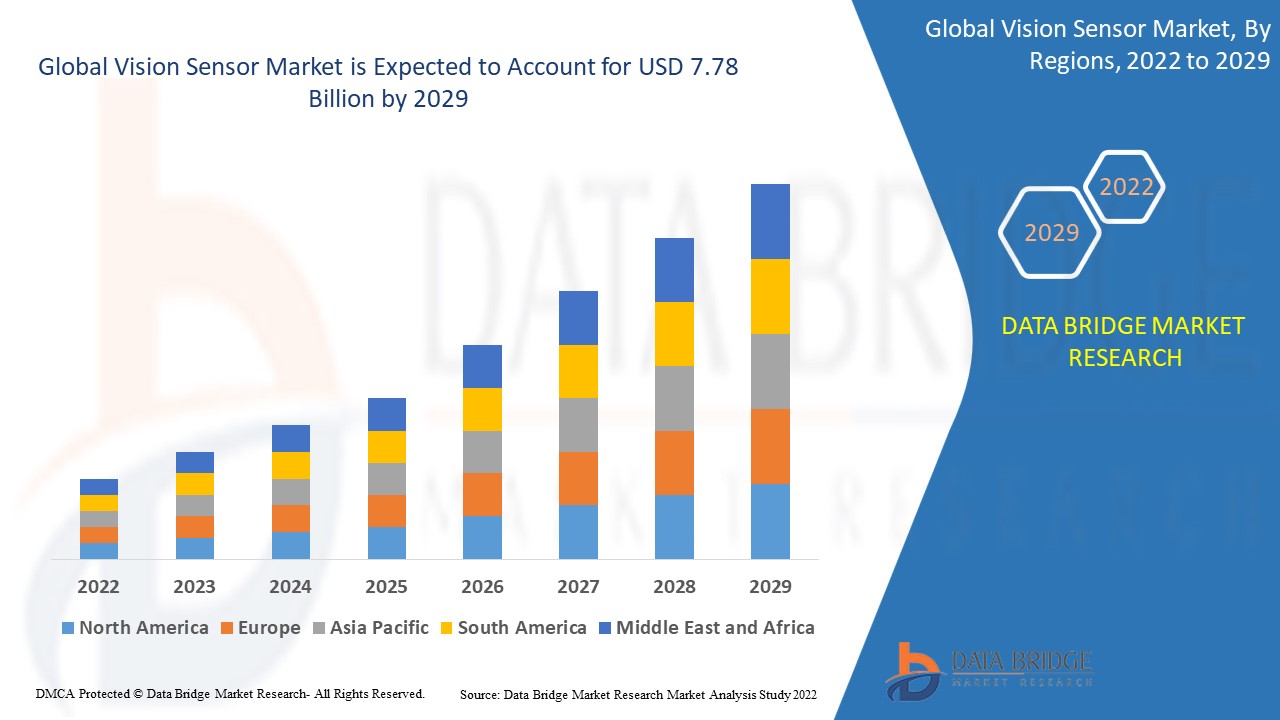
This Vision Sensor Market research report contains specific segments by type and by application. Each type provides information about the production during the forecast period. The application segment also provides consumption during that forecast period. Comprehension of these segments helps in identifying the importance of different factors that aid the market growth. Development policies and plans are discussed well in the document. Also, manufacturing processes and cost structures are analyzed. This large scale Vision Sensor business report also states import/export consumption, supply and demand figures, cost, price, revenue, and gross margins.
The Vision Sensor Market report focuses on global major leading market players providing information such as company profiles, product picture and specifications, capacity, production, price, cost, revenue, and contact information. Analysis of upstream raw materials, equipment and downstream demand is also carried out. The feasibility of new investment projects is assessed and overall research conclusions are offered. Development trends and marketing channels of Vision Sensor Market industry are analyzed as well in the report. With the list of tables and figures, the Vision Sensor business report provides key statistics on the state of the industry and is an important source of guidance and direction for companies and individuals interested in the market.
Stay ahead with crucial trends and expert analysis in the latest Vision Sensor Market report. Download now:
https://www.databridgemarketresearch.com/reports/global-vision-sensor-market
Vision Sensor Industry Overview
Segments
- On the basis of type, the global vision sensor market can be segmented into 2D vision systems, 3D vision systems, and smart cameras. 2D vision systems are widely used in applications such as quality control, sorting, and object recognition due to their ability to provide high-quality images for analysis. 3D vision systems, on the other hand, are gaining popularity in industries like automotive, healthcare, and robotics for their ability to capture depth information and generate detailed 3D models. Smart cameras combine the capabilities of traditional cameras with built-in processors for on-device image processing, making them suitable for real-time applications.
- Based on technology, the market can be categorized into digital cameras, frame grabbers, optical character recognition (OCR), barcode readers, and others. Digital cameras are among the most common technologies used in vision sensors, offering high-resolution imaging and flexibility in capturing images. Frame grabbers are essential for transferring image data from cameras to computers for processing, while OCR and barcode readers are crucial for text recognition and scanning applications.
- In terms of application, the vision sensor market is segmented into automotive, electronics and semiconductor, pharmaceuticals, food and packaging, and others. The automotive sector is a major contributor to the market growth, utilizing vision sensors for tasks like driver assistance, quality inspection, and assembly line automation. The electronics and semiconductor industry also relies heavily on vision sensors for fault detection, component positioning, and PCB inspection. In pharmaceuticals, vision sensors are used for verifying dosage accuracy, label inspection, and packaging quality control.
Market Players
- Key players in the global vision sensor market include Cognex Corporation, Omron Corporation, Keyence Corporation, Basler AG, Sick AG, Teledyne DALSA Inc., National Instruments Corporation, ifm electronic GmBH, Balluff GmBH, and Datalogic S.p.A. These companies are actively involved in product development, strategic partnerships, and mergers and acquisitions to enhance their market presence. Cognex Corporation, for instance, is known for its innovative machine vision solutions for various industries, while Basler AG specializes in high-performance cameras and vision systems for industrial applications. Omron Corporation offers a wide range of vision sensors with advanced features like pattern matching and color inspection to meet diverse customer requirements.
The global vision sensor market is witnessing significant growth driven by various factors such as increasing automation across industries, advancements in sensor technologies, and rising demand for quality inspection and process optimization. One key trend shaping the market is the adoption of machine vision systems in emerging applications like autonomous vehicles, medical imaging, and augmented reality. These evolving use cases are expanding the scope of vision sensors beyond traditional industrial applications, creating new opportunities for market players to innovate and diversify their product offerings.
Moreover, the integration of artificial intelligence (AI) and deep learning algorithms with vision sensors is revolutionizing the way businesses utilize image data for analysis and decision-making. AI-powered vision systems can perform complex tasks such as object recognition, defect detection, and pattern matching with higher accuracy and efficiency, enabling companies to improve product quality, operational efficiency, and customer satisfaction. This trend is driving the demand for intelligent vision sensors that can adapt to changing production environments and deliver real-time insights for process optimization.
Furthermore, the growing emphasis on sustainability and environmental concerns is influencing the adoption of vision sensors in green technologies and renewable energy applications. Vision sensors play a crucial role in monitoring and optimizing energy production systems, enhancing resource efficiency, and reducing waste in manufacturing processes. For instance, in the food and beverage industry, vision sensors are used for quality assurance and traceability to ensure compliance with food safety regulations and minimize environmental impact.
In terms of market dynamics, increasing investments in research and development activities by key players are fueling product innovation and technological advancements in the vision sensor market. Companies are focusing on enhancing sensor performance, expanding connectivity options, and incorporating features like cloud integration and IoT compatibility to cater to evolving customer needs. Strategic collaborations and partnerships between sensor manufacturers, software developers, and system integrators are also driving market growth and expanding market reach.
Overall, the global vision sensor market is poised for robust growth in the coming years, driven by the convergence of sensor technologies, AI applications, and industry-specific requirements. As businesses across sectors continue to prioritize digital transformation and automation, the demand for advanced vision sensors that can deliver actionable insights and drive operational excellence will remain strong. Market players that can innovate, adapt to changing market trends, and offer flexible and scalable solutions will be well-positioned to capitalize on the growing opportunities in the dynamic landscape of the vision sensor market.The global vision sensor market is anticipated to experience substantial growth in the foreseeable future, driven by key factors such as the increasing demand for automation across various industries, continuous advancements in sensor technologies, and the rising need for quality inspection and process optimization. One notable trend shaping the market is the adoption of machine vision systems in emerging applications like autonomous vehicles, medical imaging, and augmented reality. This shift towards new and innovative use cases extends the traditional industrial applications of vision sensors, unlocking fresh opportunities for market players to innovate and diversify their product portfolios to align with evolving customer needs.
Additionally, the integration of artificial intelligence (AI) and deep learning algorithms with vision sensors is revolutionizing the way businesses leverage image data for analysis and decision-making processes. AI-powered vision systems are capable of executing intricate tasks such as defect detection, object recognition, and pattern matching with heightened accuracy and efficiency, enabling companies to enhance product quality, operational efficiency, and overall customer satisfaction levels. This growing trend is fueling the demand for intelligent vision sensors that can adapt to changing production environments and provide real-time insights for optimized processes.
Furthermore, the increasing focus on sustainability and environmental considerations is influencing the adoption of vision sensors in green technologies and renewable energy applications. Vision sensors play a pivotal role in monitoring and optimizing energy production systems, improving resource efficiency, and minimizing waste in manufacturing operations. For example, in the food and beverage industry, these sensors are utilized for quality assurance and traceability to ensure compliance with food safety regulations, consequently reducing the environmental impact of the sector.
In terms of market dynamics, heightened investments in research and development initiatives by market players are propelling product innovation and technological advancements within the vision sensor market. Companies are concentrating on enhancing sensor performance, broadening connectivity options, and integrating features such as cloud compatibility and IoT integration to address the evolving requirements of customers. Collaborations and partnerships between sensor manufacturers, software developers, and system integrators are further accelerating market growth and expanding market penetration.
In conclusion, the global vision sensor market presents promising growth prospects in the coming years, fueled by the convergence of sensor technologies, AI applications, and sector-specific demands. As organizations continue to prioritize digital transformation and automation, the demand for advanced vision sensors capable of delivering actionable insights and facilitating operational excellence will remain robust. Market participants who can innovate, adapt to shifting market trends, and offer agile and scalable solutions will be well-positioned to capitalize on the burgeoning opportunities in the increasingly dynamic landscape of the vision sensor market.
Access detailed insights into the company’s market position
https://www.databridgemarketresearch.com/reports/global-vision-sensor-market/companies
Alternative Research Questions for Global Vision Sensor Market Analysis
- What is the current valuation of the global Vision Sensor Market?
- What CAGR is projected for the Vision Sensor Market over the forecast period?
- What are the key segments analyzed in the Vision Sensor Market report?
- Which companies dominate the Vision Sensor Market landscape?
- What geographic data is covered in the Vision Sensor Market analysis?
- Who are the leading firms operating in the Vision Sensor Market?
Browse More Reports:
Global Lactic Acid Ester Market
Global Music Synthesizers Market
Global Oilfield Scale Inhibitor Market
Global Pessary Market
Global Polymethacrylimide (PMI) Foam Market
Global Sepsis Market
Global Smart Waste Management Market
Global Stargardts Treatment Market
Global Vinblastine Sulfate Market
Global X by Wire Market
Global Lipids Market
Global 3D Mapping and 3D Modeling Market
Global Allergy Treatment Market
Global Aneurysm Treatment Market
Global Application Security Market
Global Capsule Endoscopy Market
Global Car Mat Market
Global Cleanroom Fluorescent Lighting Market
Global Cool Roof Coatings Market
Global Crystal Oscillator Market
About Data Bridge Market Research:
An absolute way to forecast what the future holds is to comprehend the trend today!
Data Bridge Market Research set forth itself as an unconventional and neoteric market research and consulting firm with an unparalleled level of resilience and integrated approaches. We are determined to unearth the best market opportunities and foster efficient information for your business to thrive in the market. Data Bridge endeavors to provide appropriate solutions to the complex business challenges and initiates an effortless decision-making process. Data Bridge is an aftermath of sheer wisdom and experience which was formulated and framed in the year 2015 in Pune.
Contact Us:
Data Bridge Market Research
US: +1 614 591 3140
UK: +44 845 154 9652
APAC : +653 1251 975
Email:- [email protected]